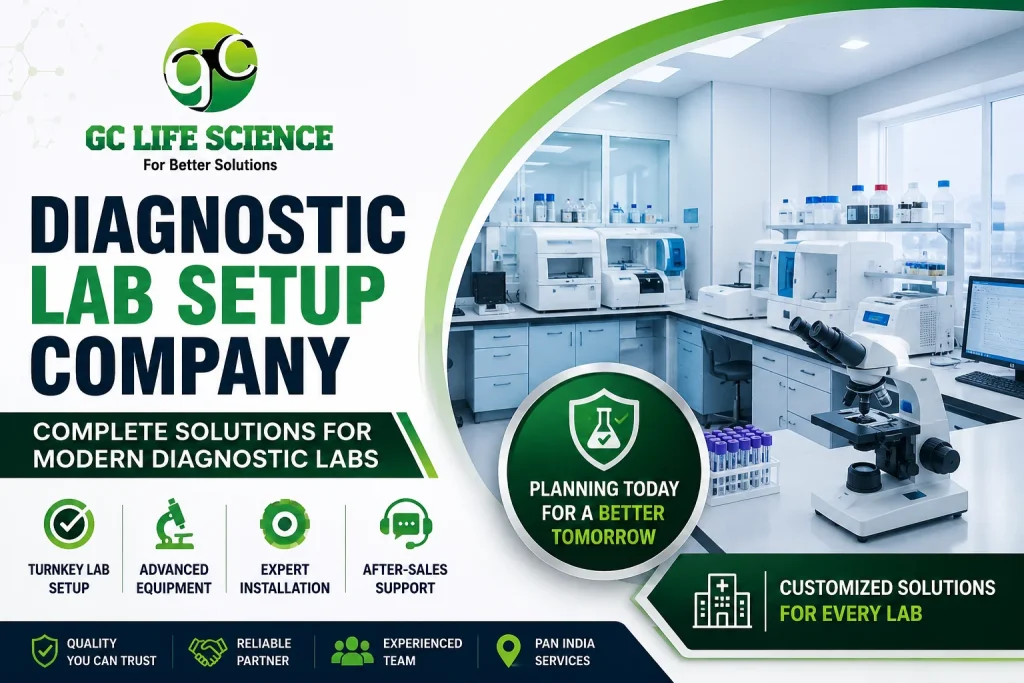
Setting up a diagnostic laboratory involves much more than purchasing a few machines and arranging them in a room. A well-planned lab needs the right layout, equipment, utilities, safety systems, workflow, documentation, and technical support.
For hospitals, pathology centers, healthcare groups, and independent diagnostic businesses, choosing the right diagnostic lab setup company can make the entire process easier.
An experienced partner can help turn an empty space into a functional laboratory designed around the tests, sample volume, staff requirements, and future growth of the facility.
What Is a Diagnostic Lab Setup Company?
A diagnostic lab setup company helps plan, design, equip, and establish laboratories according to their intended diagnostic applications.
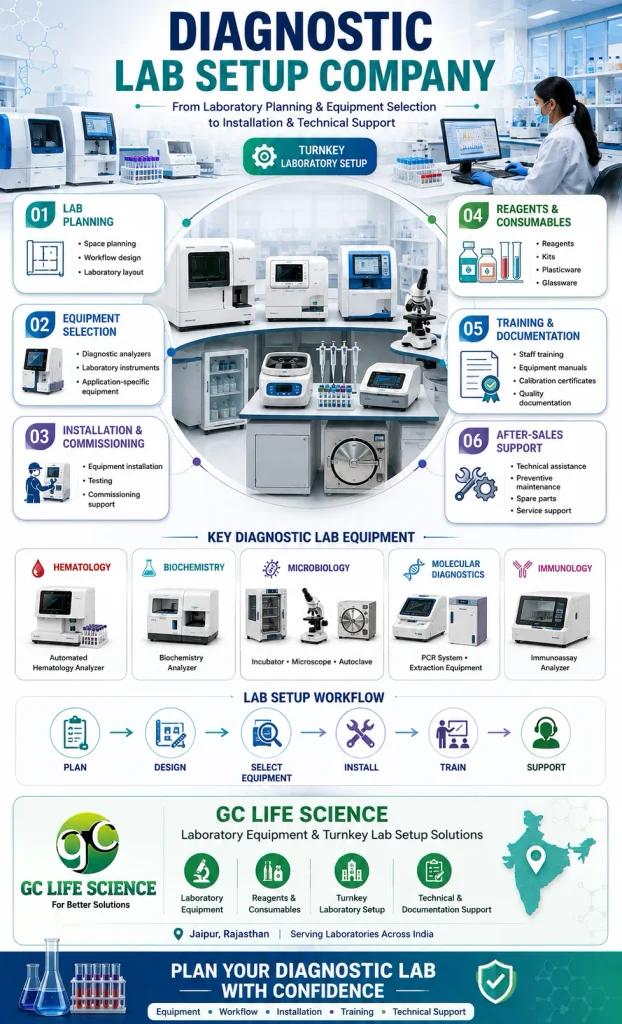
Depending on the project, its role may include:
- Laboratory space planning
- Workflow and layout design
- Selection of diagnostic equipment
- Supply of laboratory instruments
- Procurement of reagents and consumables
- Installation and commissioning
- Technical guidance
- Equipment integration
- Staff training
- Documentation and maintenance support
The exact scope varies between providers. Therefore, laboratories should understand what is included before signing a project agreement.
Why Professional Diagnostic Lab Setup Matters
A diagnostic laboratory handles patient samples, so accuracy, safety, and workflow efficiency are critical. Poor planning can create unnecessary movement, cross-contamination risks, equipment placement problems, and delays in sample processing.A professional setup starts by understanding how the laboratory will operate.
For example, a small pathology lab may have different requirements from a high-volume diagnostic center offering biochemistry, hematology, immunology, microbiology, and molecular testing.
Types of Equipment Used in Diagnostic Laboratories
The equipment required depends on the services offered by the laboratory.
Hematology Equipment
Hematology laboratories may require automated hematology analyzers, centrifuges, microscopes, blood collection accessories, and related consumables.
Biochemistry Equipment
Biochemistry sections commonly use analyzers, centrifuges, water purification systems, refrigerators, pipettes, and other supporting instruments.
Immunology and Serology Equipment
Depending on the testing menu, laboratories may require immunoassay systems, analyzers, incubators, and specialized reagents.
Microbiology Equipment
Microbiology laboratories may require incubators, autoclaves, biosafety equipment, microscopes, culture-related products, and other specialized instruments.
Molecular Diagnostics Equipment
Labs performing molecular testing may require PCR systems, nucleic acid extraction equipment, thermal cyclers, molecular diagnostic kits, and specialized consumables.
The equipment should always match the laboratory’s validated testing procedures and operational requirements.
Choosing the Right Diagnostic Lab Setup Company
Choosing the right company can significantly affect the efficiency, quality, and long-term performance of your diagnostic laboratory.
Look for a partner that offers reliable equipment, technical expertise, installation support, and dependable after-sales service.
Technical Experience
Ask whether the company understands diagnostic workflows and can recommend equipment according to specific applications.
Product Portfolio
A supplier offering instruments, reagents, kits, consumables, and related laboratory products can simplify procurement and coordination.
Installation and Commissioning
Check whether the company provides installation, equipment setup, testing, and commissioning support where required.
Documentation
Good documentation is important for equipment management, quality processes, audits, and maintenance. Depending on the product, relevant documents may include calibration certificates, certificates of analysis, manuals, and safety documentation.
After-Sales Support
A laboratory cannot afford prolonged downtime. Before purchasing equipment, ask about warranty coverage, preventive maintenance, technical support, spare parts, and service response.
GC Life Science as a Diagnostic Lab Setup Partner
GC Life Science is a Jaipur, Rajasthan-based laboratory equipment distributor and stockist that provides laboratory instruments, reagents, application-specific kits, chemicals, plasticware, and glassware. The company states that it has supported scientific and diagnostic requirements since 2014.
The company also offers turnkey laboratory setup solutions, covering consultation through installation. Its website states that these solutions are customized according to the laboratory’s space, purpose, technical requirements, and budget.
For diagnostic laboratories, this type of end-to-end approach can reduce the complexity of coordinating equipment, consumables, technical requirements, and installation with multiple vendors.
GC Life Science also highlights technical support, India-wide distribution, genuine and certified products, and documentation support, including Certificates of Analysis, Material Safety Data Sheets, and calibration certificates where applicable.
Conclusion
A successful diagnostic laboratory begins with thoughtful planning. Equipment quality is important, but it is only one part of the process.
Layout, workflow, safety, utilities, documentation, installation, staff training, and after-sales service all contribute to the laboratory’s long-term performance.
Choosing an experienced diagnostic lab setup company can make these decisions easier and help create a laboratory that is practical, efficient, and ready for future growth.
With its laboratory equipment portfolio, technical support, and turnkey setup services, GC Life Science provides an option for organizations looking for coordinated laboratory setup and supply solutions in India.
FAQs
1. What does a diagnostic lab setup company do?
A diagnostic lab setup company can help with laboratory planning, layout, equipment selection, procurement, installation, commissioning, training, and technical support, depending on the services offered.
2. How do I choose the right diagnostic lab setup company?
Look for experience, product quality, technical expertise, installation capabilities, documentation support, after-sales service, and the ability to customize the laboratory according to your requirements.
3. What equipment is needed to set up a diagnostic laboratory?
It depends on the testing menu. Common requirements may include hematology analyzers, biochemistry analyzers, centrifuges, microscopes, refrigerators, incubators, pipettes, and molecular diagnostic equipment.
4. Does GC Life Science provide turnkey laboratory setup services?
Yes. GC Life Science states that it provides turnkey lab setup solutions from consultation to installation, customized according to space, purpose, technical requirements, and budget.
5. Can a diagnostic lab setup be customized?
Yes. A laboratory should ideally be designed around its testing services, available space, expected workload, staffing, budget, and plans for future expansion.
6. Why is laboratory layout important?
A well-planned layout supports efficient sample movement, reduces unnecessary staff movement, provides appropriate equipment space, and can improve overall workflow.
7. Does GC Life Science supply laboratory instruments and consumables?
Yes. Its listed portfolio includes laboratory instruments, reagents, application-specific kits, chemicals, plasticware, and glassware.
8. What should I consider before purchasing diagnostic laboratory equipment?
Consider the intended application, testing volume, accuracy requirements, automation, compatibility, maintenance, consumable availability, technical support, warranty, and total cost of ownership.
9. Can one company handle the complete laboratory setup?
Some companies offer turnkey services that coordinate multiple stages of a project. The exact scope should be confirmed before signing an agreement.
10. Why choose GC Life Science for diagnostic laboratory setup?
GC Life Science offers laboratory products along with turnkey setup solutions, technical support, customized solutions, and distribution across India. The company is based in Jaipur and states that it has supported scientific and diagnostic requirements since 2014.