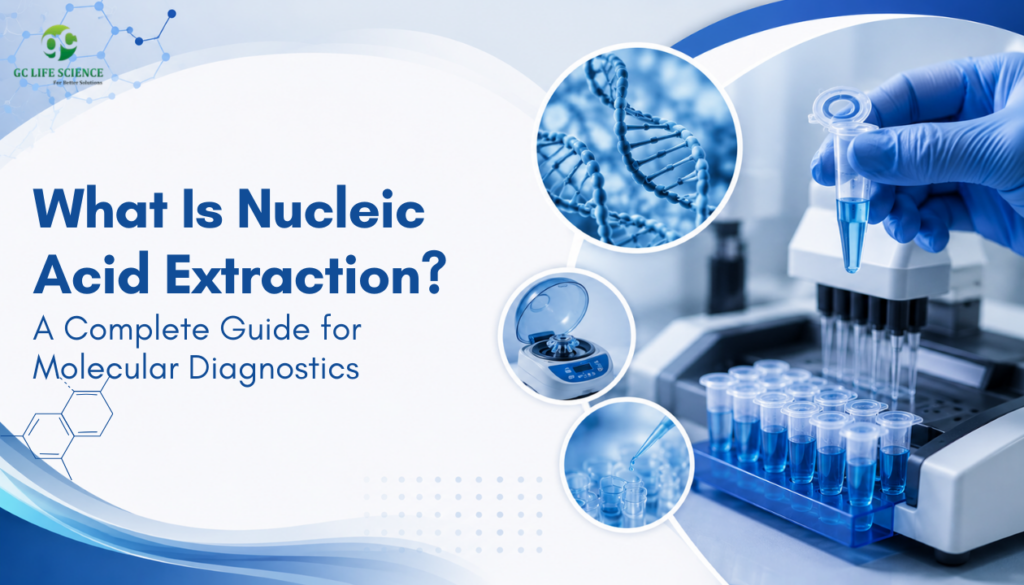
Nucleic acid extraction isolates high-quality DNA and RNA, enabling accurate molecular diagnostics, PCR testing, genetic analysis, infectious disease detection, and research.
Nucleic acid extraction is one of the most important steps in modern molecular diagnostics. It is the process of isolating high-quality DNA or RNA from biological samples for downstream applications such as PCR, Real-Time PCR (qPCR), sequencing, and genetic analysis.
The accuracy of molecular tests is highly dependent on the quality and purity of the extracted nucleic acids. Whether you’re diagnosing infectious diseases, studying genetic diseases, or doing biomedical research, reliable nucleic acid extraction delivers consistent and reproducible results.
At GC Life Science, we provide advanced DNA extraction systems, RNA extraction solutions, and automated nucleic acid extraction technologies to support clinical laboratories, research institutes, and diagnostic centers.
What Is Nucleic Acid Extraction?
Nucleic acid extraction is a laboratory process for isolating DNA or RNA from cells, tissue, blood, saliva, or other biological samples. During extraction, unnecessary proteins, lipids, enzymes, and other cellular components are removed, leaving purified nucleic acids suitable for molecular analysis.
High quality extraction is essential because contaminants can affect PCR amplification, sequencing accuracy, and other downstream applications. Modern laboratories rely on manual kits and automated extraction systems to achieve fast, reliable, and contamination free results.
Why Is Nucleic Acid Extraction Important?
The quality of extracted DNA and RNA has a direct impact on the success of molecular diagnostic tests. Improper extraction can lead to false negative results, low amplification efficiency and inconsistent laboratory results. High-quality nucleic acid extraction improves sensitivity, precision, and reproducibility for a variety of diagnostic and research workflows.
It plays a vital role in:
- Infectious disease diagnosis
- Genetic testing
- Cancer research
- Gene expression studies
- Next-Generation Sequencing (NGS)
- RT-PCR and Real-Time PCR applications
Types of Nucleic Acid Extraction
DNA Extraction
DNA extraction involves separating genomic DNA from blood, tissue, cultured cells, and other biological samples. Purified DNA is widely used in PCR, sequencing, forensic analysis, genetic testing, and molecular diagnostics.
RNA Extraction
RNA extraction aims to isolate intact RNA while preventing degradation by RNase enzymes. High-quality RNA is essential for gene expression analysis, virus detection, transcriptomics, and RT-PCR testing.
Methods of Nucleic Acid Extraction
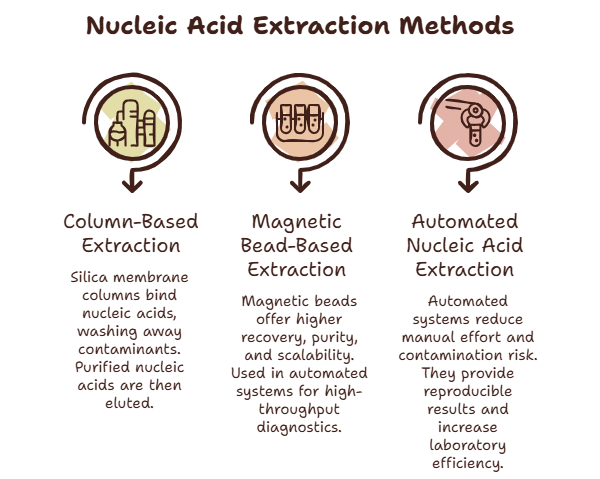
Several extraction methods are used depending on laboratory requirements and sample types.
Column-Based Extraction
Silica membrane columns selectively bind DNA and RNA, allowing contaminants to be washed away before purified nucleic acids are eluted. This method is simple, reliable, and widely used in research laboratories.
Magnetic Bead-Based Extraction
Magnetic bead technology provides higher recovery, increased purity, and increased scalability. Commonly used in automated nucleic acid extraction systems in high-throughput diagnostic laboratories.
Automated Nucleic Acid Extraction
Automated extraction systems minimize manual effort, reduce the risk of contamination, and provide highly reproducible results. These systems increase laboratory efficiency by processing multiple samples simultaneously while maintaining consistent throughput.
Applications of Nucleic Acid Extraction in Molecular Diagnostics
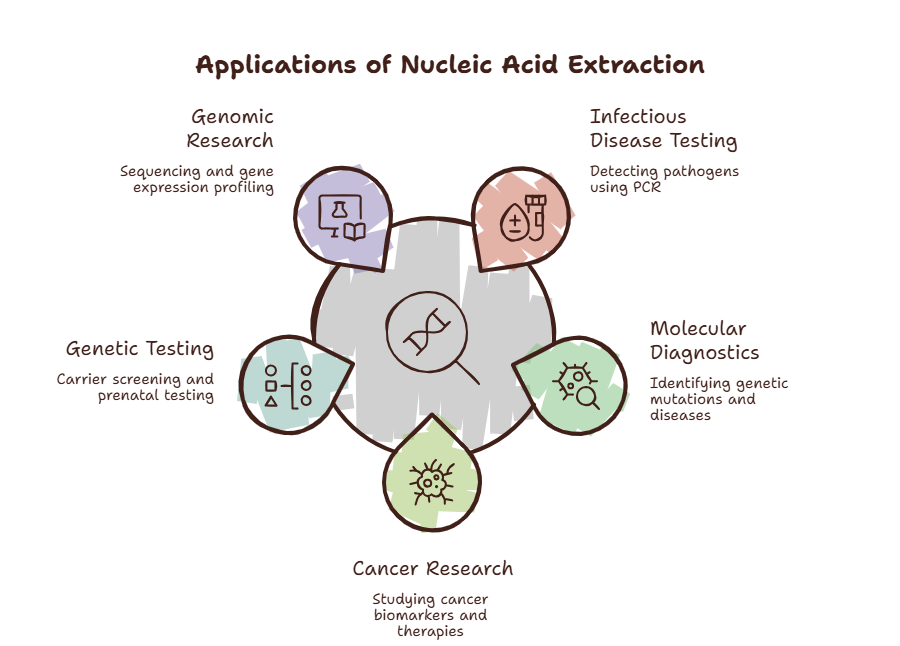
Nucleic acid extraction serves as the foundation for numerous molecular biology and clinical diagnostic applications.
Infectious Disease Testing
Purified DNA and RNA enable rapid detection of viruses, bacteria, fungi, and other pathogens using PCR-based diagnostic techniques.
Molecular Diagnostics
Nucleic acid extraction is used in clinical laboratories to detect genetic mutations, inherited diseases, and infectious diseases with high sensitivity and specificity.
Cancer Research
DNA and RNA extracted from tissue and blood samples help researchers study cancer biomarkers, gene mutations, and targeted therapies.
Genetic Testing
Precise nucleic acid extraction facilitates carrier screening, prenatal testing, pharmacogenomics, and personalized medicine.
Genomic Research
Researchers rely on high-quality nucleic acid extraction for sequencing, gene expression profiling, and advanced molecular biology studies.
Benefits of Automated Nucleic Acid Extraction
Modern laboratories increasingly prefer automated nucleic acid extraction systems because they offer significant advantages over manual methods.
- High-quality DNA and RNA recovery
- Reduced contamination risk
- Faster processing time
- Minimal manual intervention
- High-throughput sample processing
- Consistent and reproducible results
- Improved laboratory productivity
- Compatibility with PCR, qPCR, RT-PCR, and NGS workflows
Choosing the Right DNA Extraction System with GC Life Science
Choosing an appropriate DNA extraction system is essential to obtain accurate and reproducible molecular diagnostic results. Factors to consider include sample type, laboratory workload, automation requirements, throughput, extraction efficiency, and compatibility with downstream applications such as PCR, RT-PCR, and sequencing.
At GC Life Science, we provide advanced DNA extraction systems, reliable RNA extraction kits, and automated nucleic acid extraction solutions from globally trusted brands.
Backed by expert technical support, quality-assured products, and complete laboratory workflow solutions, we help diagnostic laboratories, research institutes, hospitals, and biotechnology organizations improve efficiency, reliability, and confidence in every molecular testing process.
Conclusion
Nucleic acid extraction is the cornerstone of molecular diagnostics, providing the purified DNA and RNA required for accurate PCR, RT-PCR, sequencing, and genetic analysis. As diagnostic technologies continue to evolve, reliable extraction methods remain essential for delivering dependable laboratory results.
Whether your laboratory requires a manual workflow or a fully automated nucleic acid extraction solution, choosing the right system can significantly improve efficiency, accuracy, and productivity.
GC Life Sciences provides reliable nucleic acid extraction techniques and laboratory solutions that give confidence and precision to researchers and diagnostic professionals.
FAQ’s
1. What is nucleic acid extraction?
Nucleic acid extraction is the process of isolating DNA or RNA from biological samples for molecular diagnostic and research applications.
2. Why is nucleic acid extraction important?
It ensures high quality DNA or RNA for accurate PCR, sequencing, genetic testing, and disease diagnosis.
3. What is the difference between DNA and RNA extraction?
DNA extraction isolates genomic DNA, while RNA extraction isolates RNA for gene expression studies and viral detection.
4. What samples can be used for nucleic acid extraction?
Blood, plasma, serum, tissue, saliva, swabs, cultured cells, and other biological specimens can be used.
5. What is automated nucleic acid extraction?
It is an automated laboratory process that isolates DNA and RNA with minimal manual handling, improving efficiency and consistency.
6. Which extraction method is commonly used in diagnostic laboratories?
Magnetic bead-based automated extraction is widely preferred for its speed, purity, and scalability.
7. Can extracted nucleic acids be used for Real-Time PCR?
Yes. High-quality DNA and RNA are essential for accurate Real-Time PCR (qPCR) and RT-PCR testing.
8. What are the advantages of automated extraction systems?
They reduce contamination, improve reproducibility, save time, and support high-throughput workflows.
9. Which industries use nucleic acid extraction?
Healthcare, molecular diagnostics, biotechnology, pharmaceuticals, research institutions, food testing, and environmental laboratories all rely on nucleic acid extraction.
10. Why choose GC Life Science for nucleic acid extraction solutions?
GC Life Science provides advanced DNA extraction systems, RNA extraction solutions, automated nucleic acid extraction platforms, technical expertise, and trusted laboratory products for reliable molecular diagnostic workflows.